
By Blake Hestir and Mark Dennis

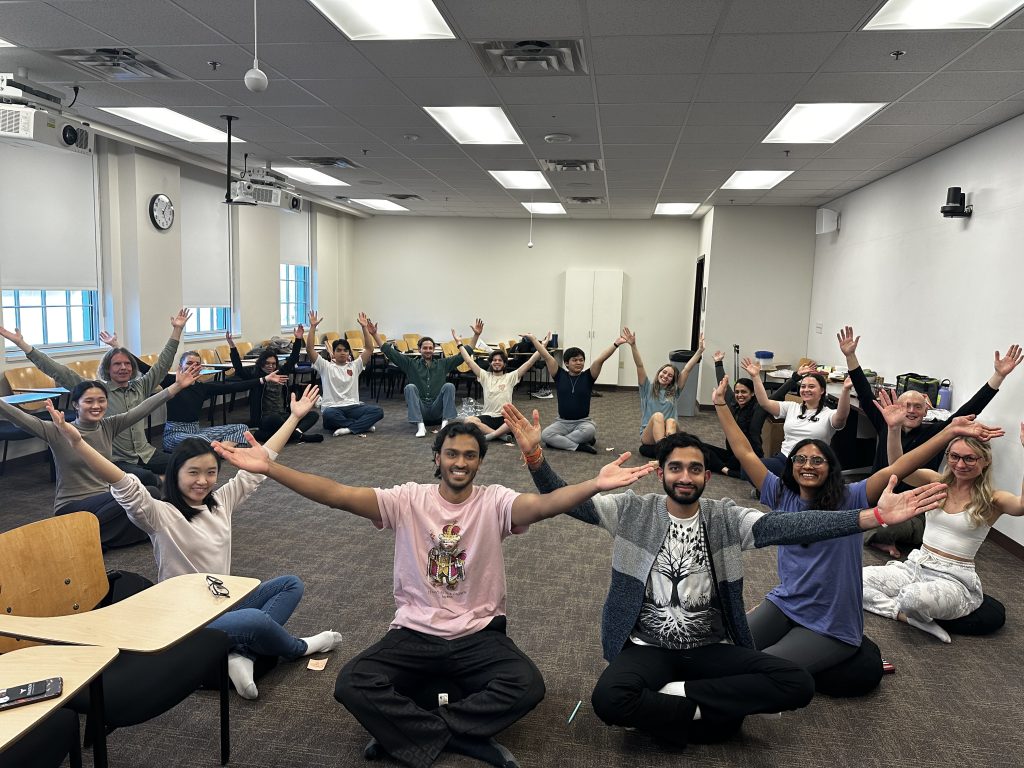
A student in the Art and Science of Flourishing course shared the following poignant reflection:
As a Vietnamese immigrant to America, the search for a place to call home has been a recurring theme throughout my life. This course has helped me understand that belonging starts from within and that accepting and valuing myself is crucial to feeling a sense of belonging. … This course has challenged me to think critically, approach complex issues with empathy and understanding, and engage in thought-provoking discussions. The interdisciplinary approach to learning has allowed me to gain a deeper appreciation for the power of different perspectives and has inspired me to pursue further academic exploration. Beyond the academic benefits, this course has taught me valuable life skills, such as the importance of interconnectedness, belonging, and compassion in leading a fulfilling life.
Naturally, his words are inspiring. They express sentiments that we are hearing more frequently as interest continues to grow in CALM Studies (Compassionate Awareness and Living Mindfully), including this course and others offered through the initiative at Texas Christian University (TCU).
The Origins and Ethos of CALM
The work we do in CALM is dedicated to reimagining campus culture and community by fostering the conditions necessary for all beings and the lands we inhabit to flourish. It was founded in 2012 by Andy Fort, emeritus professor of South Asian Religions in the TCU Religion Department.
Rooted in our core values of belonging, wisdom, compassion and flourishing, CALM offers a holistic educational approach that nurtures spaces where people can grow and learn to live well together.
The work of CALM is both inward- and outward-facing. Inwardly, it promotes self-awareness and transformation through practices like mindfulness meditation, metta (“unconditional friendship” or “loving-kindness”) meditation, storytelling and mindful walking. Outwardly, it builds community through weekly student-led meditations, monthly mini-retreats that include sharing meals and community connection, and initiatives such as CALM Convos “meaningful conversations” program and the CALM Buddies peer-support program.
The acronym CALM reflects both an aspiration and a call to action. “Calm” evokes the inner stillness and awareness that emerges through regular contemplative practice. At the same time, the acronym CALM, which stands for “Compassionate Awareness and Living Mindfully” signals a broader ethical and communal orientation—a practice of seeing and responding to the many faces of suffering in the world with courage, care and commitment. This dual meaning animates our work, urging participants to avoid turning away from suffering or injustice and to face it mindfully with compassion, and to act where they can and are welcome.
At its core, CALM is about belonging and collective flourishing. The group is committed to cultivating spaces that are non-hierarchical, welcoming and deeply inclusive—what we describe as an “activism of belonging”. This includes ecological, interpersonal and individual belonging – being at home with the land, community and oneself in a mutually supportive and respectful way. These are spaces where individuals can show up as their authentic selves, engage in deep listening and share their stories without fear of judgment.
CALM encourages “deep hospitality” – a practice of radical openness and care for everyone, no matter their background or experience. CALM offers an alternative to the dominant, competitive, self-oriented paradigms of success, inviting students to imagine and embody more sustainable, co-creative and meaningful ways of being.
Collaborations and Reach
Through various collaborative partnerships on campus and beyond, we continue to expand our programmatic offerings. One of our most significant partnerships is with the Center for Healthy Minds (CHM) at the University of Wisconsin–Madison, which helped bring a version of the Art and Science of Flourishing to TCU. John Dunne, CHM’s Distinguished Chair in Contemplative Humanities, has visited TCU multiple times to introduce research and pedagogy to our community while helping CALM Studies develop its programming.
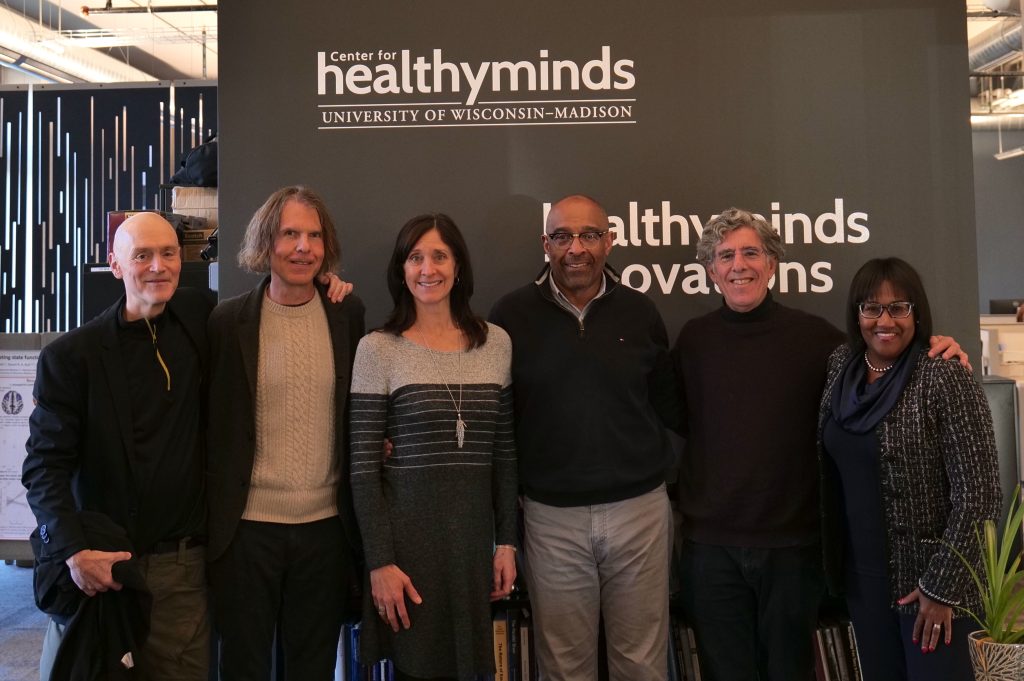
In March 2023, Richard “Richie” Davidson, Founder and Director of CHM, delivered a keynote at TCU as part of the Ronald E. Moore Symposium on well-being. His talk, Well-being Is a Skill, highlighted the scientific foundation of mindfulness and its measurable impact on human flourishing. Rhonda Magee, Professor Emeritus and Founding Director of the Center for Contemplative Law and Ethics at the University of San Francisco, delivered the second symposium keynote later that month, titled, Deepening the Inner Work of Flourishing Together: Practicing Ethically-grounded, Socially-engaged Mindfulness in Troubled Times. Their inspiring visits were well received and helped galvanize campus-wide interest in CALM’s mission and vision.
Our reach also extends into the broader Fort Worth community. CALM members volunteer with The Mind Body Ecology Institute (MBEI), a program directed by Blake which guides people in reconnecting with nature, community and self to cultivate flourishing while inspiring wise and responsible environmental stewardship. Further, CALM members frequently volunteer to lead mindfulness programs in local high schools across Fort Worth.
Together, CALM and MBEI collaborate on a program called CALM Community Convos, which seeks to remove some of the barriers between the university and the surrounding communities. The program is designed to support individuals across the TCU campus and the greater Dallas-Fort Worth Metroplex in finding balance, clarity and connection through nature-based mindfulness, meditation and meaningful conversation. CALM Community Convos creates intentional, small-group opportunities for deep listening, mindfulness practice and personal growth while highlighting the value of greenspaces for personal well-being and urban development. Together, we co-create a community of belonging, connection with nature and collective flourishing.
Another key initiative of CALM is the Circle for Community in Connection, inspired by Rhonda Magee’s teaching during her visit. This initiative brings together underrepresented students at TCU with community leaders such as civil rights icon Dr. Opal Lee and local activist Jerry Hawkins, for a community practice of deep listening and mindful story sharing. The goals are to reflect on life experiences and to model what an inclusive flourishing community can look like.
The CALM Center and Beyond
CALM’s growth and the increasing recognition of our work have laid the groundwork for the next major chapter in CALM’s evolution: the establishment of the TCU CALM Center for Student Flourishing. Envisioned as a multidisciplinary hub, the CALM Center will integrate innovative pedagogy, contemplative science, environmental stewardship and diverse well-being programs.
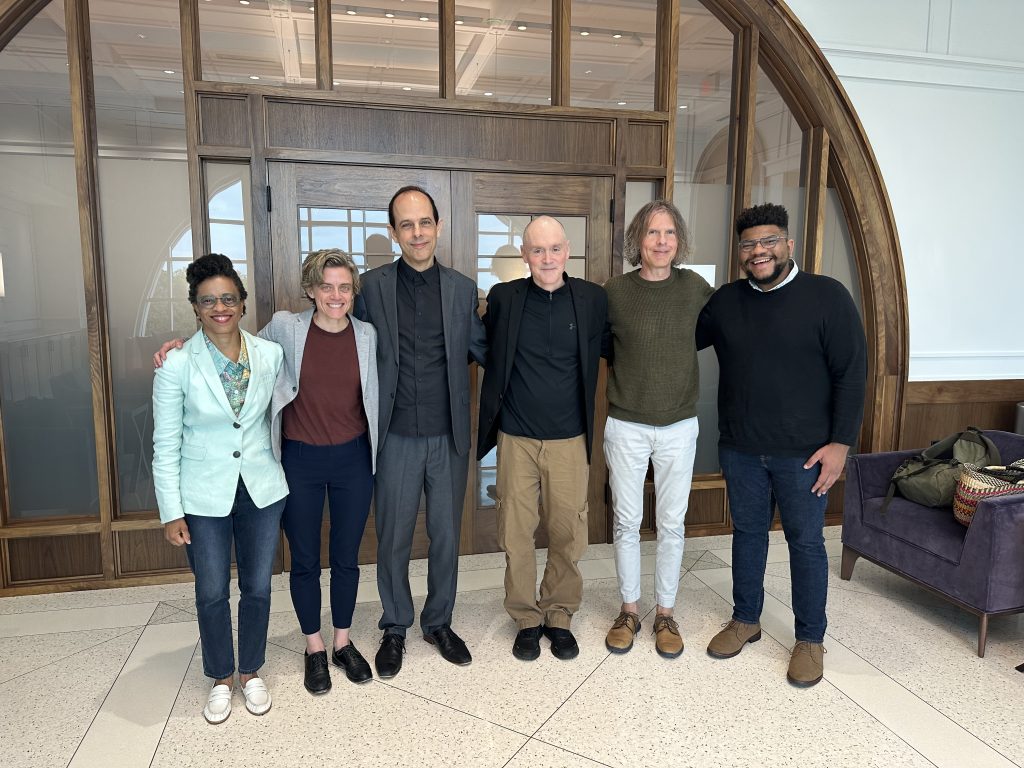
In 2023, we traveled with TCU Chancellor Victor Boschini and AddRan College of Liberal Arts Dean Sonja Watson to CHM at the University of Wisconsin–Madison to explore how to move forward on creating TCU’s CALM Center. There we met with Richie Davidson, John Dunne, Tony Chambers, Susan Huber, Matt Hirshberg and other members of CHM who generously helped us think through how to raise funds, conduct research, and more.
On the heels of that meeting, we received a $10,000 internal grant to support exploratory development of the Center. As part of this project, FAN members Megan Kennedy, Kizz Prusia, Rhonda Magee and David Germano spent three days on campus in April 2024, workshopping ideas and meeting with administrators and key stakeholders.
TCU’s CALM Center will serve students, faculty, staff and the broader Fort Worth community with workshops, retreats, mindfulness trainings and experiential learning opportunities.
We see the work of CALM as representing a broader shift in cultural currents coming back to life: a move toward valuing the inner development of students, faculty and staff as much as we value their academic and professional achievements. By embedding mindfulness and compassion into campus and community life, CALM helps parents, students and faculty see TCU as a place committed to nurturing the whole person.
The future of CALM Studies is one of collaboration, imagination and hope. Through ongoing partnerships, a strong commitment to research and education and a deeply rooted ethical vision, CALM will continue to evolve as a vital part of TCU’s identity. It reminds all of us—students, educators and community members alike—that well-being is not just an individual goal, but a shared endeavor.